Rising electricity bills and high-cost inverter systems have led many individuals to seek a long-term solution, which is why rooftop solar is gaining popularity. For those who want to install solar panels on the rooftop, affordable and smart solar solutions are available in markets today.
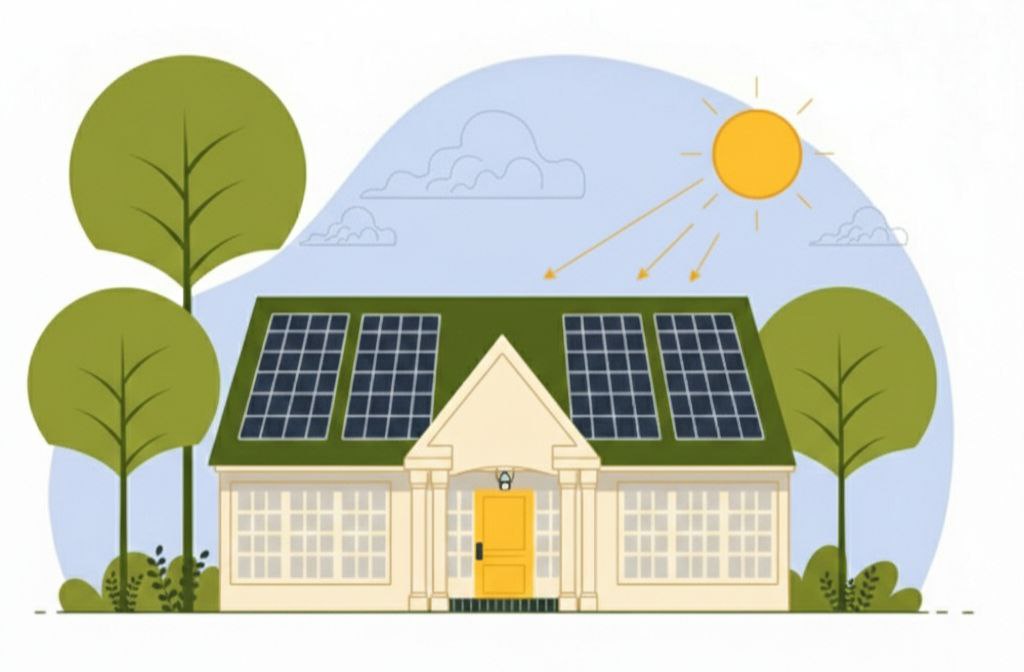
Save Your Electricity Bills by Using Rooftop Solar Panels:
The main advantage of installing solar panels is big savings on monthly electricity bills. A 3kW solar system can generate around 12 to 15 units per day, which can reach about 350 to 450 units per month. This can reduce a monthly electricity bill of ₹2000 to ₹4000 significantly, and in some cases, it can become almost zero. With a 5kW setup, the savings can be even higher. If net metering is available, extra electricity generated can be sent to the grid, which can also give you credits, making the long-term benefits even better.
How to Choose Your Rooftop Solar Panel Capacity?
Solar Panels are available in multiple system sizes to suit different user needs. Solar setups available in the market are from 1kW up to 10kW capacity. A 1kW solar system can be a good option for small homes where basic appliances like lights, fans, and TVs are used. A 3kW to 5kW system is usually ideal for middle-class families because it can support appliances like a refrigerator, AC, washing machine, and water pump comfortably. For bigger homes or shops, a 7kW to 10kW setup may also be offered. The higher the system capacity, the more electricity units it generates, and the more savings you get on your monthly bill.
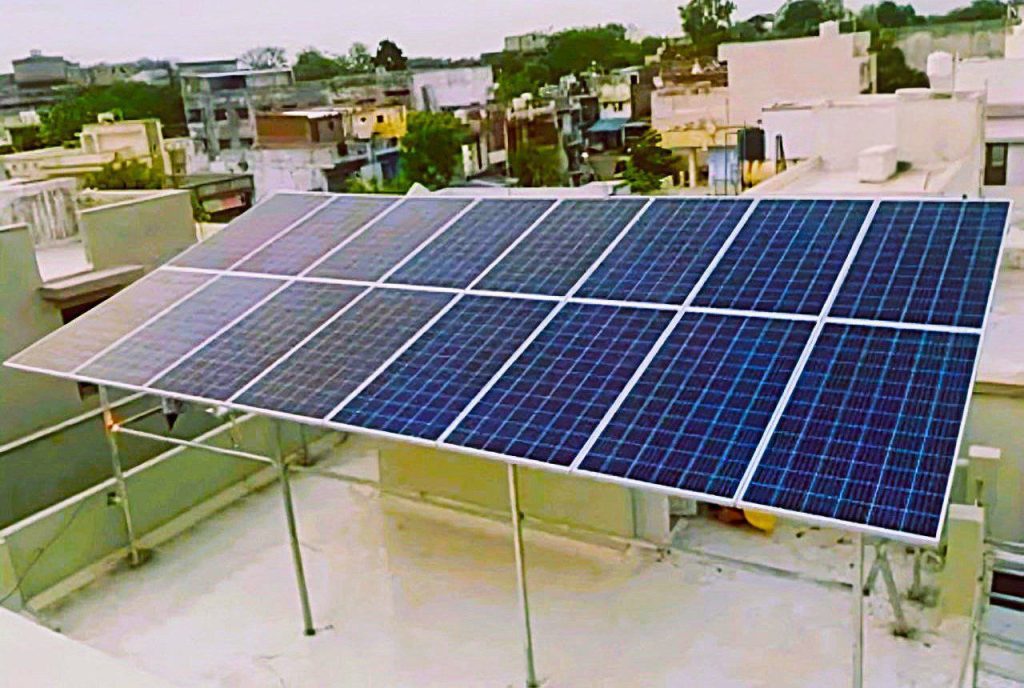
Area required for rooftop solar Panels:
You need roughly 8-10 square meters (86-108 sq ft) of clear, shadow-free roof space for every 1 kilowatt of solar panels, with a typical residential 3kW system needing 24-30 sq meters (250-300 sq ft) and a 5kW system requiring 40-50 sq meters (430-500 sq ft). The exact space depends on panel size, efficiency, and roof obstructions, but aim for 100 sq ft per kW as a general rule, allowing for maintenance gaps.
Solar Panel Efficiency and Lifespan Details:
Modern Solar Panel manufacturers offer high-efficiency monocrystalline panels, known for strong performance and higher energy generation. The efficiency could be around 20% to 25%, which means more electricity can be produced even from a smaller rooftop area. This can be very useful for homes with limited terrace space. These panels are also expected to have a long lifespan, and with proper maintenance, they can work smoothly for up to 25 years.
Solar Panel Technology:
Modern solar buyers prefer the latest technologies like Mono PERC (Passivated Emitter and Rear Cell) and TOPCon (Tunnel Oxide Passivated Contact), and HJT (Heterojunction Technology) because they deliver better output even in low sunlight.
The Mono PERC is a cost-effective solution with average efficiency. TOPCon solar panels offer higher efficiency at a lower price, thanks to their design similarity to PERC solar panels. The HJT solar panels are the latest designs with better efficiency at a slightly higher cost.
Battery and Inverter Support for Backup:
Many customers want not only an on-grid solar system, but also a backup plan for nighttime use and power outages. Some Solar Panels have inverter and battery support for such consumers. In this scenario, a lithium battery backup is used along with hybrid inverters.
Lithium batteries charge faster, provide better backup, and last longer compared to traditional batteries. A hybrid inverter can operate in both on-grid and off-grid modes, allowing it to keep your essential appliances functioning even during a power outage.
Price and Subsidy Benefits:
For a 1kW system, the estimated price could be around ₹45,000 to ₹70,000. A 3kW to 5kW setup may cost around ₹1.5 lakh to ₹3 lakh, depending on panel quality, inverter type, battery option, and installation. Apart from this, customers may also benefit from the government’s rooftop solar subsidy, which can reduce overall cost and help to recover the investment faster.
![Directional Over Current Relay [67]:](https://electengmaterials.com/wp-content/uploads/2019/07/Directional-Relay-Characteristic-150x150.png)

